
An Introduction and Understanding of Ecofeminism
Updated: Feb 26, 2022
Learn about the roots of ecofeminism, who is paving the way, and what
to expect next.

Welcome!
Welcome to Global Ecofeminist! This is a blog platform where topics of global justice, environmental rights and feminism are discussed in relation to one another. My name is Alexandra Shaw, and this is an introduction about me. I am a graduate from California State University Northridge with a Bachelor’s Degree in Liberal Studies and a minor in Sustainability. I am also an avid activist and advocate for environmental and women’s rights in the United States as well as globally.
When I was sixteen years old, I began discovering pieces by Ralph Waldo Emerson and Henry David Thoreau that I completely fell in love with. Their respect and perspective of the natural world moved me greatly. Since then, I knew that environmental issues would be my primary path in life moving forward. I also took an interest in women’s rights as I grew older and experienced the world. The National Women’s March and the #MeToo movement in the United States shed light on issues that have been long overlooked in this society. I was curious about these issues, and started researching the connection between these two issues, and found the word “ecofeminism.”
So, What is Ecofeminism?

Françoise d'Eaubonne - French Feminist
To begin defining this term, I searched online for an explanation that could embody this widely unknown concept. According to writer Sarah Regan in the article “What is Ecofeminism?” she states “the term ‘ecofeminism’ was coined by French feminist Françoise d'Eaubonne in 1974. According to her, the disenfranchisement and oppression of women, people of color, and the poor are intrinsically linked to the degradation of the natural world, as both arose as a result of patriarchal dominance,” (Regan).
This term connects the treatment of women with the treatment of Earth. It allows us to view the Earth and women’s bodies as one in the same, focusing on female empowerment and making sociological observations on the connection between the abuse of women and nature at the hands of greedy men throughout recorded history. This greatly includes women of color, including Black and Indigenous women who suffer pronounced disadvantages from the patriarchal system. She continues to acknowledge that “women are disproportionately affected by environmental issues…women worldwide typically hold less monetary wealth and rely on the natural environment more, they are more likely to be displaced by climate change…” (Regan).
While the data and evidence are prominent towards women being disadvantaged by climate change, there are still many opinions on the ecofeminist movement and many confuse or misunderstand the term “feminism” to believe it is only a fight for women’s rights. It is the fight for equality among women, men, non-binary identifying people and everyone else in a patriarchal world. Feminism is beneficial for both women, men and other identifying peoples, because it focuses on the balance that we need to keep every aspect of human life sustainable. The energies and forms of feminine and masculine intertwine with each other to form equity, and as of now, we are quite unbalanced with excess masculine energy and suppressed feminine energy. Regan continues to state “patriarchal dominance, which presupposes masculine attributes are more valuable, has led to the degradation of nature, along with the marginalized groups, including but not limited to, women, children and people of color,” (Regan). While the ecofeminism movement is slowly gaining progressive power, it is important that we examine specific examples of ecofeminism imbalance that affects women’s bodies and in turn, the Earth.
Why Is This Relevant?
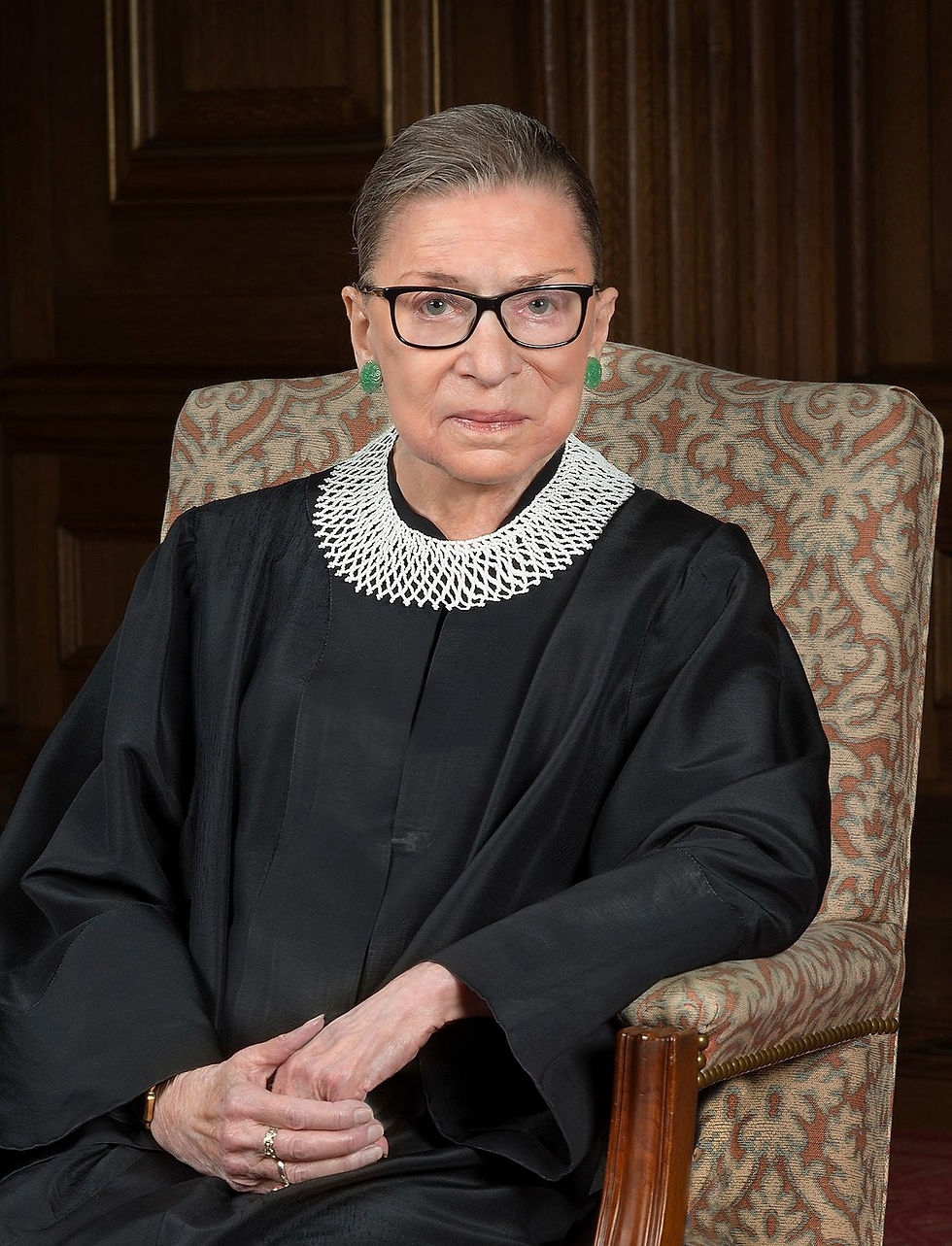
Ruth Bader Ginsburg - Former Associate Justice of the Supreme Court of the United States
There are a multitude of relevant examples we can look at today that explain the impacts of where ecofeminism plays a role in our society. For instance, we can look at our political leaders, whether they have been in office for decades, or are just now joining. Ruth Bater Ginsburg, who has recently passed away, was a lawyer and served on the United States Supreme Court for 27 years. She was the second woman to serve on the Court in history, and worked on many environmental and gender issues that were not being addressed effectively in the Supreme Court. In Ria Tabacco Mar’s article titled “Ruth Bater Gindsburg’s Fight for Gender Equity was for All of Us” she restates the idea that “dismantling patriarchy was necessary not only for women’s liberation, but for all of us to have the freedom to thrive regardless of gender,” (Mar). She continues to state “Ginsburg was able to show male judges that sex discrimination hurt men as well as women” (Mar) in a 1970’s case involving the blatant difference of treatment that both sexes receive. She also worked on environmental cases such as Massachusetts v. EPA, Friends of the Earth v. Laidlaw and others that proved crucial and sufficient in the environmental sector of law.

Alexandria Ocasio-Cortez - American Politician and Activist
Alexandria Ocasio-Cortez is an American politician and activist who works on climate justice through supporting the Green New Deal. She is a prominent figure and role model in United States policy today. She speaks out for women and the climate in meetings and courts, as well as fights for issues of economic inequality which ultimately relates to the system of patriarchy in which we are living. The patriarchy disadvantages and is dangerous to everyone involved, including women and men.

Greta Thunberg - Environmental Activist
Another prominent figure in the environmental and ecofeminism fight is Greta Thunberg. She has brought light to the climate crisis beginning at sixteen years old by striking her school and refusing to attend every Friday until her country of Sweden’s politicians took climate action. Her bravery and passion opened the world’s eyes to the problem we are facing: a global climate crisis. She has brought a voice to children, women and the environment alike, not giving up in the faces of powerful politicians and societal traditions. She is a true inspiration and figure of our time and acknowledges that the youth today are being robbed of our childhoods and lives by having to solve an issue that is clearly not in our hands. She embodies ecofeminism, revealing firsthand how the disenfranchisement and oppression of women, people of color, and the poor are intrinsically linked to the degradation of the natural world, as both arose as a result of patriarchal dominance.
What Can We Expect and Where Can We Go?
This issue that is affecting women and the environment alike disadvantages our economies, vulnerable communities and our health. One of the largest impacts we can make to reverse this catastrophe of climate change is to address our current economies. This is where the lens of ecofeminism is useful and is relevant to our examination. We must reinvest into a feminist economy.
While attending an online presentation from Grassroots Global Justice Alliance, I learned “a feminist economy is a critique of our current economic system and the study of the economy based on investment, productivity, capital and time invested…it is a way of reclaiming the economy as the management of home,” (Grassroots Global Justice Alliance). This was interesting to me, as it allowed me to realize we must work with the system presented and that in time, it can be used for good purposes and environmental and human sustainability. To my understanding, a feminist economy is one where we put women and the environment in a place for success and where their needs are met and counted through means of investment, productivity and time. The presentation went on to state “it is also a political proposal that integrates various proposals for women and gender non-conforming people’s autonomy, and transforms systems of oppression we live in; proposes a system that places the sustainability of life at the center, in dialogue with the other proposals – global well-being, food sovereignty, energy sovereignty, farmworker sovereignty, black abolitionist feminism etc.” (Grassroots Global Justice Alliance).
We are seeing a slow shift in human perspective and systems as we speak, but there is much more to be done. Ecofeminism is a social and spiritual shift that respects and supports the rights of women and the environment to create a harmonious and sustainable world. Sarah Regan introduces a concept called “ethic of care, an approach to morality grounded in feminine characteristics of care and nurturing…this approach focuses on human benevolence and acting in a way that prioritizes care for others,” (Regan). Ecofeminism is about accepting the characteristics of both the masculine and feminine and understanding the balance we must achieve to be successful and healed. As we begin to examine the world through this lens in future posts, we must remember the small changes we can make as well as the big ones. For example, stand up and speak out for women when you witness mistreatment or misconduct around you. Speak up and protect the lands on which we live, including Indigenous rights and protections. People respect this and you have the amazing power to help someone think differently by your well-intentioned actions. Ecofeminism is only fully embodied when everyone receives the same respect including women, men, animals and the Earth.
Citations
Mar, Ria Tabacco. “Ruth Bader Ginsberg's Fight for Equity Was for All of Us.” American Civil Liberties Union, ACLU News and Commentary, 22 Sept. 2020, www.aclu.org/news/civil-liberties/ruth-bader-ginsburgs-fight-for-gender-equity-was-for-all-of-us/.
Regan, Sarah. “What Is Ecofeminism? Understanding The Intersection Of Gender & The Environment.” MBG Planet, Mindbodygreen, 22 June 2020, www.mindbodygreen.com/articles/ecofeminism-history-and-principles.


Comments